


For Families
Addiction and the Family: Healing Together
Published Jan 9, 2026 · Updated Jul 8, 2026
Addiction is often called a "family disease" because it affects everyone in the home — not just the person using. The good news: when families heal together, recovery gets stronger for everyone.
How addiction reshapes a family
Over time, family members take on roles to cope — the caretaker, the enabler, the scapegoat, the peacemaker. These roles come from love and survival, but they can quietly keep the whole system stuck.
Why family involvement matters
Research consistently shows that people whose families are involved in treatment complete care at higher rates and relapse less. Family education helps everyone understand addiction, recovery, and relapse prevention — and how to build a supportive home.
Healthy boundaries aren't rejection
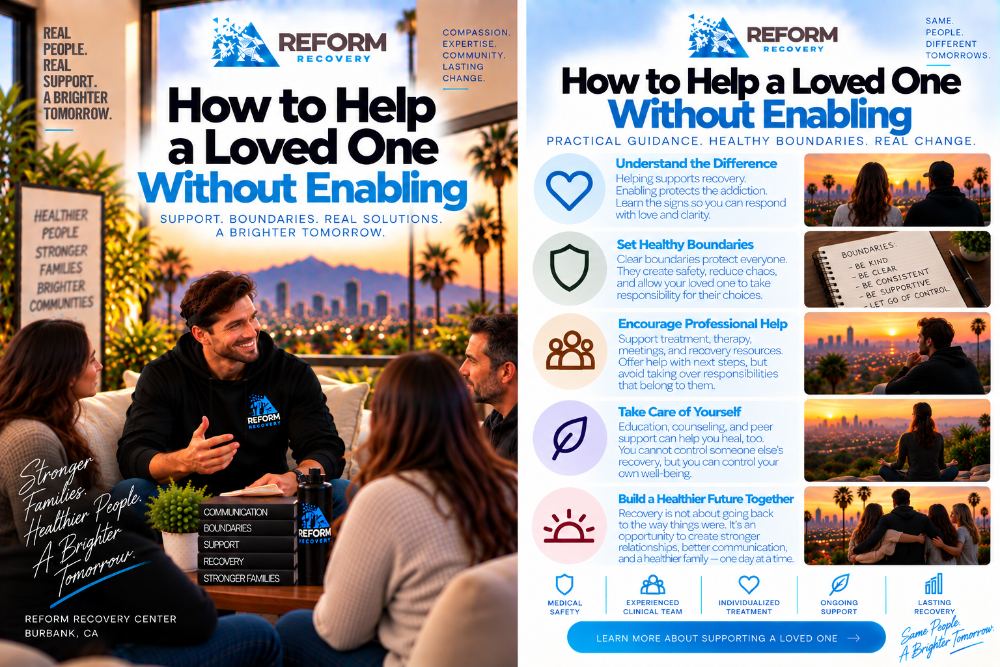
Boundaries protect your wellbeing and your loved one's recovery. Saying "I love you, and I won't do this for you" can be one of the most supportive things you ever do.
Caring for yourself, too
You've likely carried a heavy load. Support groups, counseling, and simply talking to people who understand can help you heal. You matter in this story, too — and your healing helps theirs.
Ready to take the first step?
One confidential call is all it takes. We'll verify your insurance and handle the details.
Call 844-R-REFORMSources
- SAMHSA — Resources for Families Coping with Mental and Substance Use Disorders
- National Institute on Drug Abuse (NIDA) — Treatment and Recovery
- Al-Anon Family Groups
These trusted, publicly available sources informed this article. Reform Recovery Center is not affiliated with and does not endorse these organizations; links are provided for educational reference.
This article is educational and is not medical advice or a substitute for professional care. If you or someone you love is in immediate danger, call 911. For emotional crisis or suicide support, call or text 988, 24/7.