



Recovery & Aftercare
Building a Sober Support Network
Published Jan 24, 2026 · Updated Jul 8, 2026
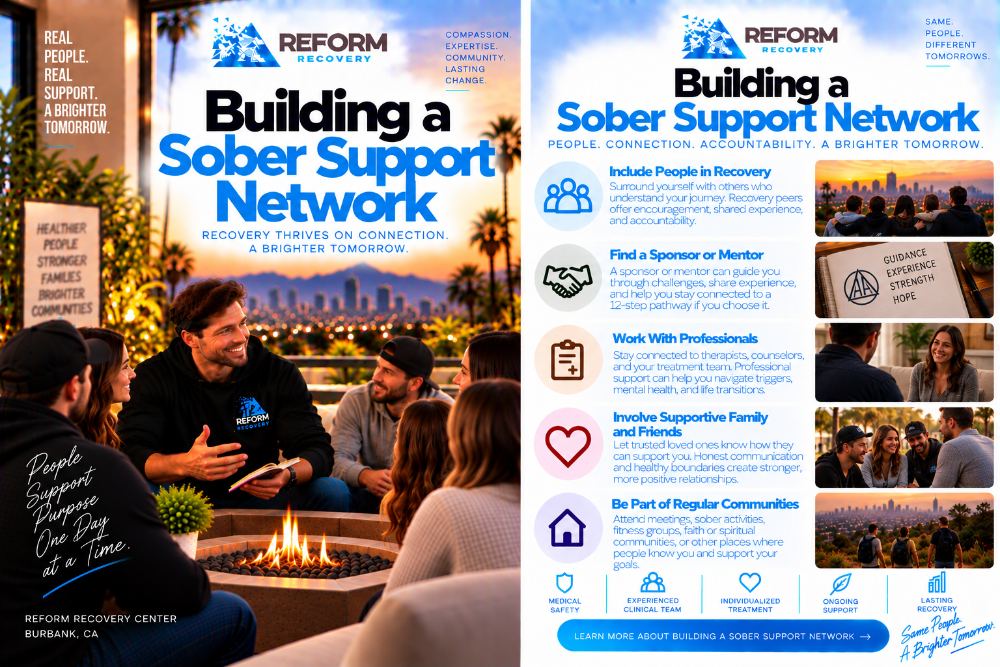
No one recovers alone. A strong sober support network is one of the best predictors of lasting recovery — because connection is the opposite of addiction. Here's how to build yours.
Who belongs in it
- A sponsor or mentor a few steps ahead of you
- Sober friends and peers who get it
- A recovery community — meetings, alumni groups, or a home group
- Supportive family and healthy friendships
- Your counselor or therapist
How to build it
Show up consistently to meetings or groups and actually talk to people. Exchange numbers. Say yes to sober activities. It feels awkward at first — do it anyway. Real bonds form through repeated, honest contact.
Tending relationships
A network only helps if you use it — reach out on good days, not just hard ones. Being of service to others deepens the bonds and your own recovery.
You'll find your people
Our alumni community is part of this for life. Call us to learn how we keep people connected after treatment.
Ready to take the first step?
One confidential call is all it takes. We'll verify your insurance and handle the details.
Call 844-R-REFORMSources
- Recovery Research Institute (Massachusetts General Hospital / Harvard Medical School)
- SAMHSA — Find Support
- National Institute on Drug Abuse (NIDA) — Treatment and Recovery
These trusted, publicly available sources informed this article. Reform Recovery Center is not affiliated with and does not endorse these organizations; links are provided for educational reference.
This article is educational and is not medical advice or a substitute for professional care. If you or someone you love is in immediate danger, call 911. For emotional crisis or suicide support, call or text 988, 24/7.