


For Families
How to Help a Loved One With Addiction (Without Enabling)
Published Mar 25, 2026 · Updated Jul 8, 2026
Loving someone with addiction can leave you exhausted and afraid. The most powerful things you can do are stay connected, set healthy boundaries, and encourage treatment — while remembering their recovery is ultimately theirs to carry.
Helping vs. enabling
Helping supports recovery. Enabling unintentionally protects the addiction from its consequences — covering for them, paying for the habit, or repeatedly rescuing them. Enabling comes from love, but it removes the very consequences that can motivate change.
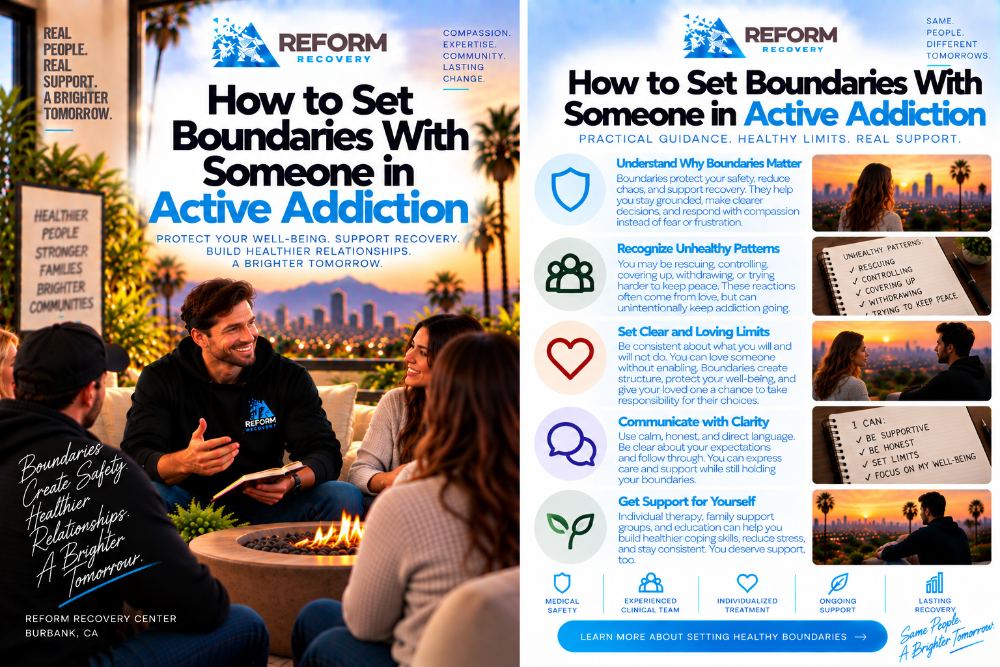
Set boundaries that protect you both
- Be clear and consistent about what you will and won't do.
- Stop funding the addiction, even indirectly.
- Take care of your own health — you can't pour from an empty cup.
How to encourage treatment
Lead with concern, not judgment. Use "I" statements ("I'm scared for you"), offer a concrete next step, and be ready with a phone number to call. Sometimes just saying "I'll help you make the call" changes everything.
What if they refuse?
You're not powerless and you're not alone. Call us and we'll talk through approaches. Studies show family involvement improves outcomes — so getting your own support matters, too.
Ready to take the first step?
One confidential call is all it takes. We'll verify your insurance and handle the details.
Call 844-R-REFORMSources
- SAMHSA — Resources for Families Coping with Mental and Substance Use Disorders
- NIDA — Treatment
- SAMHSA — National Helpline (1-800-662-4357)
- Al-Anon Family Groups
These trusted, publicly available sources informed this article. Reform Recovery Center is not affiliated with and does not endorse these organizations; links are provided for educational reference.
This article is educational and is not medical advice or a substitute for professional care. If you or someone you love is in immediate danger, call 911. For emotional crisis or suicide support, call or text 988, 24/7.