




Getting Started
How to Start the Conversation About Treatment
Published Mar 31, 2026 · Updated Jul 8, 2026
Bringing up treatment with someone you love can feel terrifying. Done with care, it can also be the moment everything begins to change. Here's how to approach it.
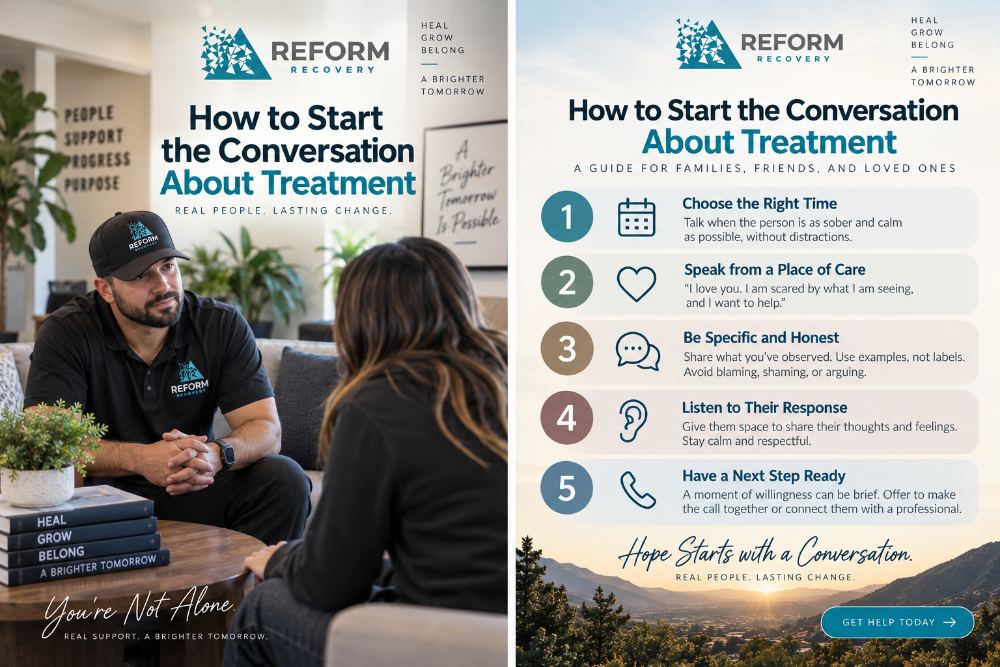
Pick the right moment
Choose a calm, private time when they're sober and you're not in the middle of a conflict. Never try to have this conversation during or right after using — emotions run too high.
Lead with love, not blame
Use "I" statements: "I love you and I'm scared for you," not "You need to fix yourself." Speak to specific things you've seen and how they made you feel. Judgment triggers defensiveness; compassion opens doors.
Have a next step ready
Don't just raise the problem — offer a concrete path. "I found a place that will verify your insurance for free, and I'll sit with you while you call." Removing friction makes "yes" easier.
If they say no
Don't force it or give ultimatums you won't keep. Plant the seed, keep the door open, and get support for yourself. Sometimes it takes more than one conversation — and that's okay. We can coach you through it.
Ready to take the first step?
One confidential call is all it takes. We'll verify your insurance and handle the details.
Call 844-R-REFORMSources
- NIDA — Treatment
- SAMHSA — Resources for Families Coping with Mental and Substance Use Disorders
- SAMHSA — National Helpline (1-800-662-4357)
These trusted, publicly available sources informed this article. Reform Recovery Center is not affiliated with and does not endorse these organizations; links are provided for educational reference.
This article is educational and is not medical advice or a substitute for professional care. If you or someone you love is in immediate danger, call 911. For emotional crisis or suicide support, call or text 988, 24/7.