



Mental Health & Dual Diagnosis
PTSD and Substance Use: Finding Real Relief
Published May 6, 2026 · Updated Jul 8, 2026
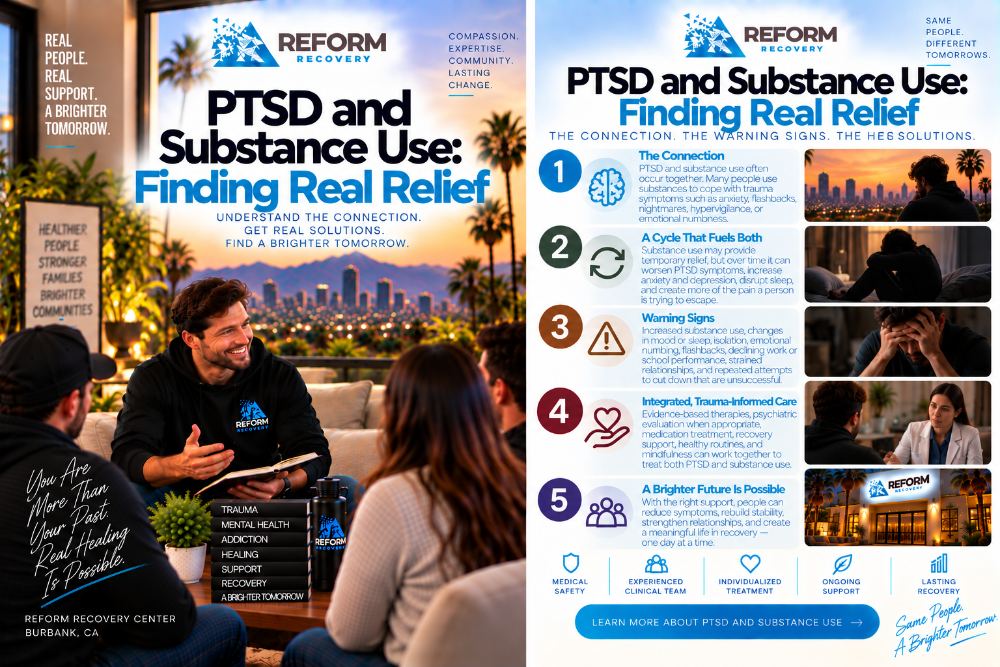
Post-traumatic stress disorder (PTSD) and substance use disorders often occur together — among veterans, survivors of abuse or violence, first responders, and many others. Treating them together is the path to real, lasting relief.
How PTSD drives substance use
PTSD brings flashbacks, nightmares, hypervigilance, and emotional numbness. Substances can feel like the only way to get through the night or quiet the mind — a form of self-medication that becomes its own trap.
Why integrated care works
Treating the addiction while ignoring the PTSD (or vice versa) usually fails, because the untreated condition keeps reigniting the other. Integrated, trauma-informed treatment addresses both at once, safely.
What treatment can include
- Trauma-focused therapies (such as CBT and EMDR)
- Skills to manage triggers and regulate the nervous system
- Safe, supported reduction of substances
- Medication support where appropriate
Relief is possible
Healing from PTSD and addiction together is not only possible — it's happening for people every day. Call us to find your way to it.
Ready to take the first step?
One confidential call is all it takes. We'll verify your insurance and handle the details.
Call 844-R-REFORMSources
- NIMH — Post-Traumatic Stress Disorder (PTSD)
- U.S. Department of Veterans Affairs — National Center for PTSD
- National Institute of Mental Health (NIMH) — Co-Occurring Substance Use and Mental Disorders
- SAMHSA — Co-Occurring Disorders
These trusted, publicly available sources informed this article. Reform Recovery Center is not affiliated with and does not endorse these organizations; links are provided for educational reference.
This article is educational and is not medical advice or a substitute for professional care. If you or someone you love is in immediate danger, call 911. For emotional crisis or suicide support, call or text 988, 24/7.