

Recovery & Aftercare
Recovery Activities That Build Lasting Sobriety
Published May 21, 2026 · Updated Jul 9, 2026
If you're in recovery — or thinking about starting — the truth is that sobriety isn't just about stopping drugs or alcohol. It's about building a new life that actually feels worth staying sober for. One of the biggest shifts people experience is discovering new activities that bring purpose, connection, and joy without substances.
At Reform Recovery Center in Los Angeles, our IOP focuses on helping individuals develop these healthy habits and routines. Recovery involves personal growth, connection with others, and learning new ways to handle life's challenges.
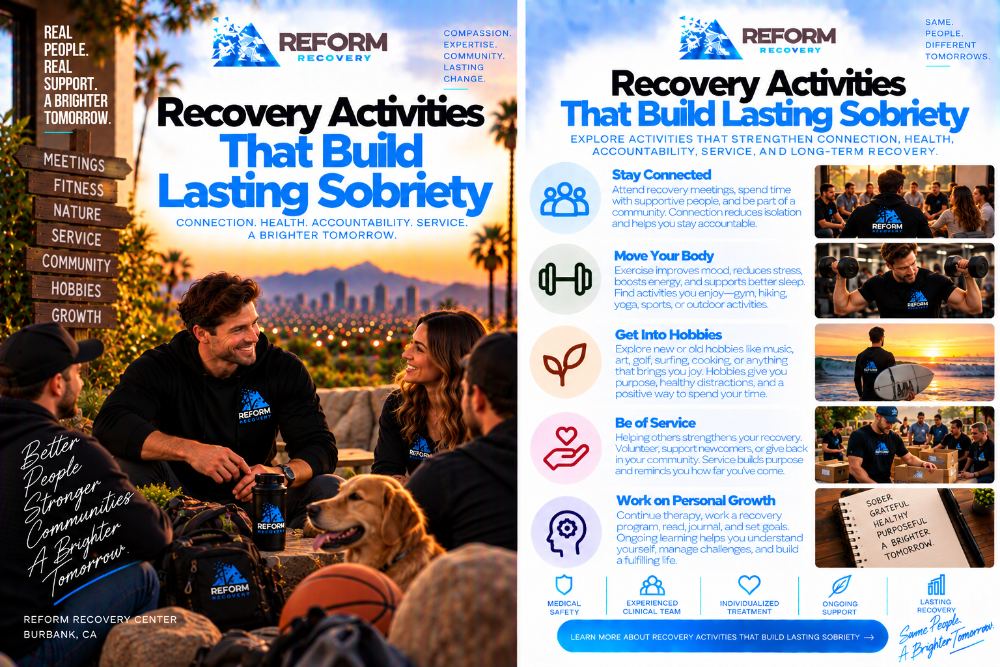
Attending recovery meetings
Meetings create connection and accountability. Being surrounded by others who understand the journey helps you stay motivated and reminds you that you're not alone.
Building a healthy routine
Structure is important in early sobriety. Regular sleep, work, exercise, and daily responsibilities create stability and reduce the temptation to return to old habits.
Exercise and physical wellness
Physical activity improves mood, reduces stress, and restores energy. Many people find that caring for their bodies becomes a key part of maintaining sobriety.
Service and helping others
Helping others is a powerful recovery tool. Mentoring someone newer in recovery or simply offering encouragement reinforces your own commitment.
Continuing treatment and support
Programs like our IOP provide ongoing structure and community while you practice recovery in real life. Recovery isn't just about avoiding substances — it's about creating a life filled with meaning, connection, and growth.
Ready to take the first step?
Reform Recovery Center's Intensive Outpatient Program serves the Los Angeles & Burbank area. One confidential call is all it takes — we'll verify your insurance and handle the details.
Call 844-R-REFORMSources
- Recovery Research Institute (Massachusetts General Hospital / Harvard Medical School)
- SAMHSA — Find Support
- National Institute on Drug Abuse (NIDA) — Treatment and Recovery
These trusted, publicly available sources informed this article. Reform Recovery Center is not affiliated with and does not endorse these organizations; links are provided for educational reference.
This article is educational and is not medical advice or a substitute for professional care. If you or someone you love is in immediate danger, call 911. For emotional crisis or suicide support, call or text 988, 24/7.