




Recovery & Aftercare
Returning to Work After Treatment
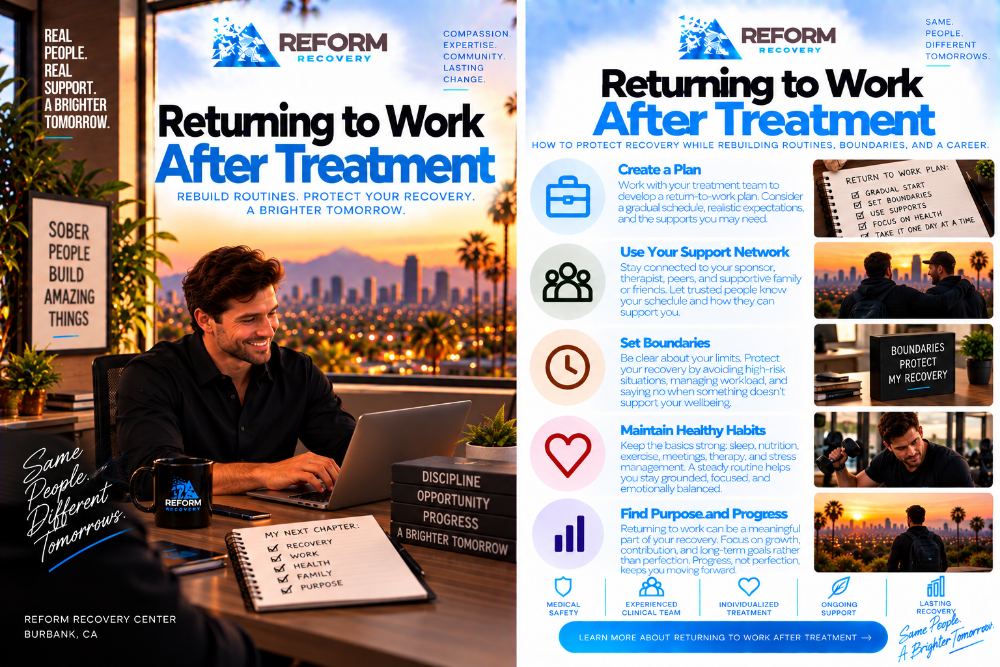
Published May 21, 2026 · Updated Jul 8, 2026
Returning to work after treatment is a milestone — and a transition that deserves a plan. Balancing career demands with your recovery is very doable with a little intention.
Ease back in
If possible, return gradually and keep your recovery routines (meetings, therapy, sleep) firmly in place. Don't let work swallow the practices that keep you well — they come first, because everything else depends on them.
Manage stress and triggers
- Know your workplace triggers (happy hours, high pressure) and plan for them
- Have coping tools ready for stressful days
- Protect your lunch break or a moment to reset
What to share (and not)
You're not obligated to disclose your recovery. Share only what you're comfortable with. If you need accommodations, know that protections like the ADA and FMLA may apply.
Work as part of recovery
Purposeful work can strengthen recovery — structure, meaning, and self-worth. Keep it in balance, and it becomes an asset. Call us to build an aftercare plan that fits your job.
Ready to take the first step?
One confidential call is all it takes. We'll verify your insurance and handle the details.
Call 844-R-REFORMSources
- U.S. Department of Labor — Family and Medical Leave Act (FMLA)
- SAMHSA — Find Support
- Recovery Research Institute (Massachusetts General Hospital / Harvard Medical School)
These trusted, publicly available sources informed this article. Reform Recovery Center is not affiliated with and does not endorse these organizations; links are provided for educational reference.
This article is educational and is not medical advice or a substitute for professional care. If you or someone you love is in immediate danger, call 911. For emotional crisis or suicide support, call or text 988, 24/7.