



For Families
How to Talk to Children About a Parent's Addiction
Published Jun 5, 2026 · Updated Jul 8, 2026
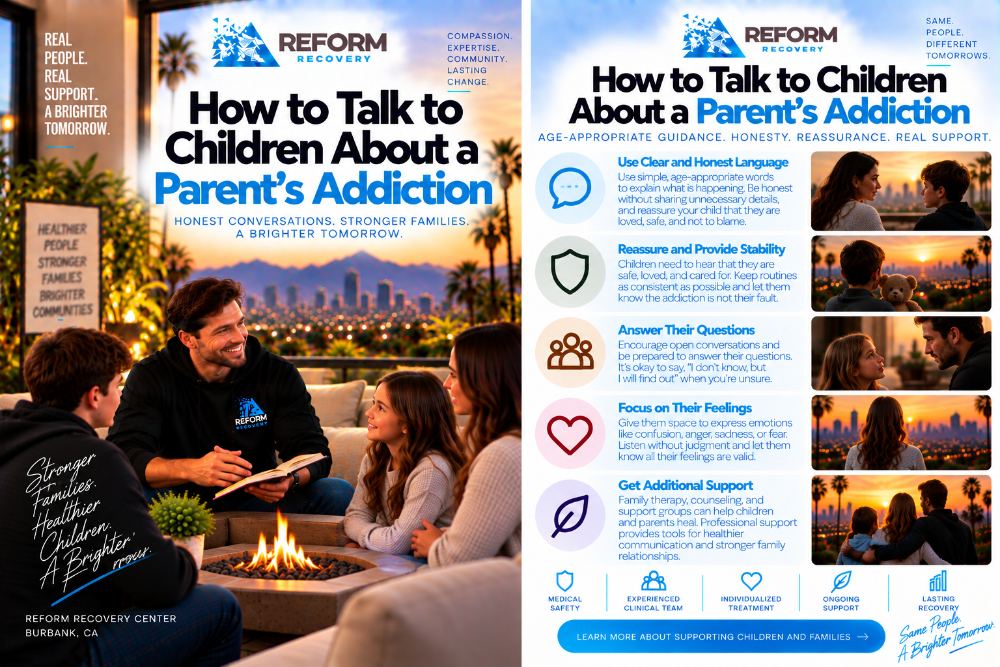
Children are perceptive — they usually sense when something is wrong. Talking to them honestly and age-appropriately about a parent's addiction protects them from confusion, self-blame, and shame.
Guiding principles
- The "7 C's": children need to know they didn't cause it, can't control it, can't cure it — but they can help care for themselves, communicate feelings, make healthy choices, and celebrate themselves.
- Keep it simple and honest, matched to their age.
- Reassure them it's not their fault and they are loved.
What to say
For younger kids: "Mom/Dad has an illness called addiction. It's not your fault, and grown-ups are helping." For older kids, you can share a bit more and invite their questions. Let them feel whatever they feel.
Protecting them
Keep routines steady, ensure a trusted adult is available, and consider counseling or support groups (like Alateen) built for kids.
You don't have to do this alone
Call us — family support is part of what we do.
Ready to take the first step?
One confidential call is all it takes. We'll verify your insurance and handle the details.
Call 844-R-REFORMSources
- National Association for Children of Addiction (NACoA)
- SAMHSA — Resources for Families Coping with Mental and Substance Use Disorders
- The National Child Traumatic Stress Network (NCTSN)
These trusted, publicly available sources informed this article. Reform Recovery Center is not affiliated with and does not endorse these organizations; links are provided for educational reference.
This article is educational and is not medical advice or a substitute for professional care. If you or someone you love is in immediate danger, call 911. For emotional crisis or suicide support, call or text 988, 24/7.