




Recovery & Aftercare
What Is a 'Dry Drunk'? Understanding Emotional Recovery
Published May 27, 2026 · Updated Jul 9, 2026
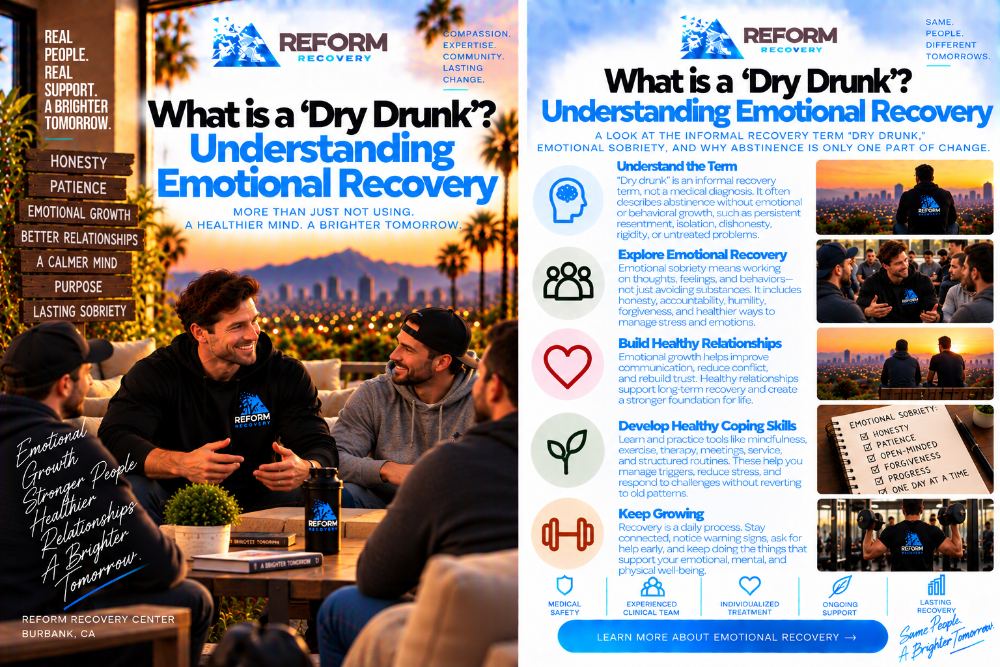
You may have heard the term "dry drunk" in recovery circles. It doesn't refer to someone who is drinking — it refers to someone who has stopped drinking but hasn't experienced the emotional and personal growth that recovery requires. The alcohol may be gone, but the thinking, behaviors, and emotional patterns that fueled the addiction are still there.
At Reform Recovery Center in Los Angeles, this is something we talk about often in our IOP. Recovery is about far more than simply stopping substances — it's about learning how to live life differently, with honesty and emotional growth, not just abstinence.
Signs of a 'dry drunk'
- Anger, resentment, or irritability
- Blaming others for problems
- Difficulty handling stress or emotions
- Feeling restless, unhappy, or dissatisfied with life
- Struggling in relationships
Without emotional growth, sobriety can feel frustrating or empty — which is often why some people relapse.
Why emotional recovery matters
True recovery happens when a person begins addressing the underlying issues behind addiction — learning new coping skills, improving emotional awareness, and building healthier relationships. Once substances are removed and the mind clears, clients begin developing the tools to navigate life with honesty, resilience, and connection.
Recovery is about transformation
Sobriety is the beginning, not the end. The goal isn't just to stop drinking or using — it's to build a life that feels meaningful and fulfilling. At Reform, we help people move beyond simply being sober toward true emotional recovery and lasting transformation.
Ready to take the first step?
Reform Recovery Center's Intensive Outpatient Program serves the Los Angeles & Burbank area. One confidential call is all it takes — we'll verify your insurance and handle the details.
Call 844-R-REFORMSources
- Recovery Research Institute (Massachusetts General Hospital / Harvard Medical School)
- National Institute on Drug Abuse (NIDA) — Treatment and Recovery
These trusted, publicly available sources informed this article. Reform Recovery Center is not affiliated with and does not endorse these organizations; links are provided for educational reference.
This article is educational and is not medical advice or a substitute for professional care. If you or someone you love is in immediate danger, call 911. For emotional crisis or suicide support, call or text 988, 24/7.