




Recovery & Aftercare
How to Handle Cravings in Early Recovery
Published Feb 5, 2026 · Updated Jul 8, 2026
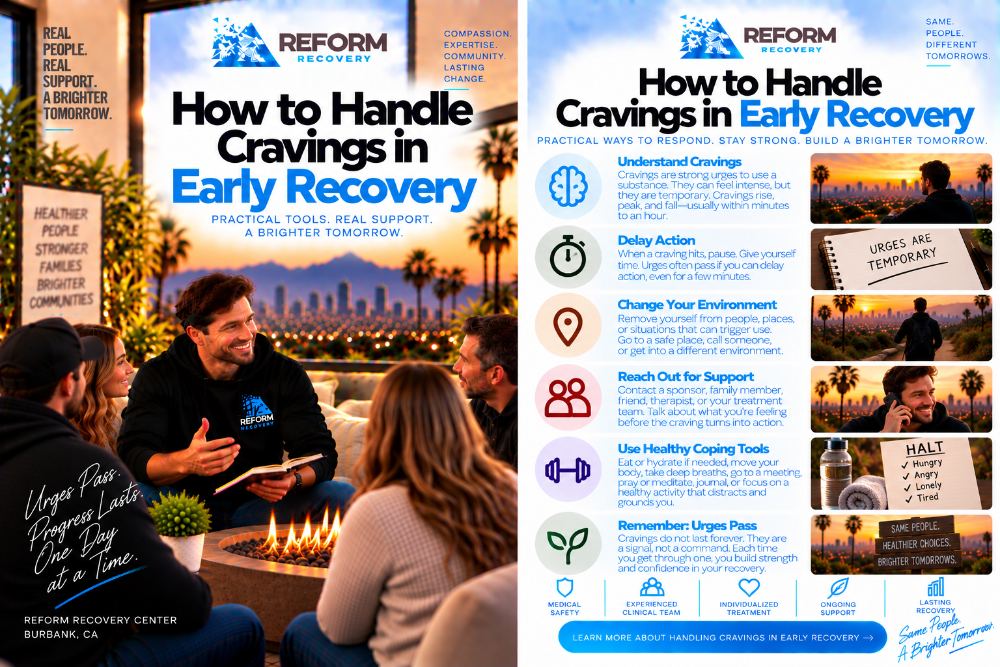
Cravings are a normal part of early recovery — and they always pass. Learning to ride them out instead of fighting or fearing them is a skill you can build. Here's how.
Remember: cravings are temporary
A craving typically peaks and fades within about 15–30 minutes, like a wave. You don't have to make it disappear — you just have to outlast it. "Urge surfing" means noticing the wave, breathing, and letting it crest and pass.
Practical techniques
- Delay: tell yourself "not right now," and wait 20 minutes.
- Distract: change your environment, take a walk, call someone.
- Play the tape forward: honestly imagine how using would actually end.
- Reach out: a craving shared with someone loses its grip.
Reduce their power over time
Avoid known triggers early on, keep structure, sleep and eat well, and treat underlying stress. As your brain heals, cravings become less frequent and less intense.
You're stronger than the wave
Call us for tools and support to get through the early months.
Ready to take the first step?
One confidential call is all it takes. We'll verify your insurance and handle the details.
Call 844-R-REFORMSources
- National Institute on Drug Abuse (NIDA) — Treatment and Recovery
- Recovery Research Institute (Massachusetts General Hospital / Harvard Medical School)
- NIMH — Psychotherapies
These trusted, publicly available sources informed this article. Reform Recovery Center is not affiliated with and does not endorse these organizations; links are provided for educational reference.
This article is educational and is not medical advice or a substitute for professional care. If you or someone you love is in immediate danger, call 911. For emotional crisis or suicide support, call or text 988, 24/7.