

What We Treat
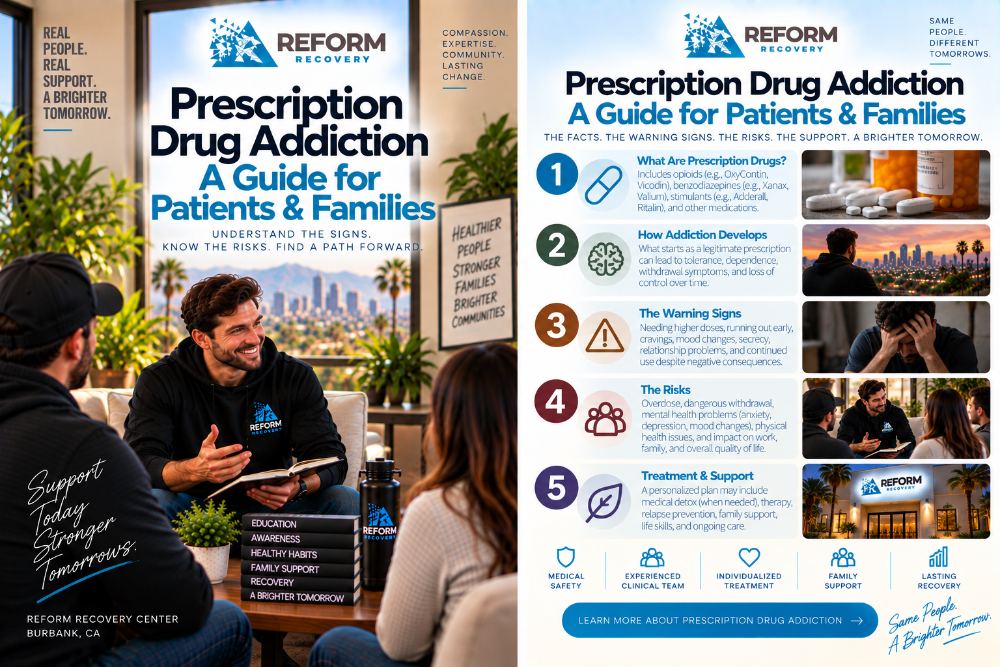
Prescription Drug Addiction: A Guide for Patients & Families
Published May 3, 2026 · Updated Jul 8, 2026
Prescription drug addiction often starts with a legitimate prescription, which is part of what makes it so easy to miss. It can happen to anyone — and it responds well to treatment.
The three main types
- Opioid painkillers (oxycodone, hydrocodone) — for pain, high dependence risk.
- Benzodiazepines (Xanax, Valium) — for anxiety/sleep, dangerous withdrawal.
- Stimulants (Adderall, Ritalin) — for ADHD, commonly misused for focus or energy.
Warning signs
Watch for taking more than prescribed, "losing" prescriptions, seeing multiple doctors, mood or behavior changes, and using despite problems. With prescriptions, the line into addiction can blur gradually.
For families
Because these drugs come from a doctor, families often hesitate to act. Trust your instincts — if use looks out of control, it's worth a conversation and a call for guidance.
How treatment helps
Depending on the drug, care may include medically supervised detox and therapy to address why the medication became a crutch. Call us for a confidential assessment.
Ready to take the first step?
One confidential call is all it takes. We'll verify your insurance and handle the details.
Call 844-R-REFORMSources
- NIDA — Prescription Opioids DrugFacts
- MedlinePlus — Prescription Drug Misuse
- U.S. Food & Drug Administration (FDA) — Benzodiazepine Drug Class Safety Warning
These trusted, publicly available sources informed this article. Reform Recovery Center is not affiliated with and does not endorse these organizations; links are provided for educational reference.
This article is educational and is not medical advice or a substitute for professional care. If you or someone you love is in immediate danger, call 911. For emotional crisis or suicide support, call or text 988, 24/7.