




Recovery & Aftercare
How to Build a Relapse Prevention Plan
Published May 15, 2026 · Updated Jul 8, 2026
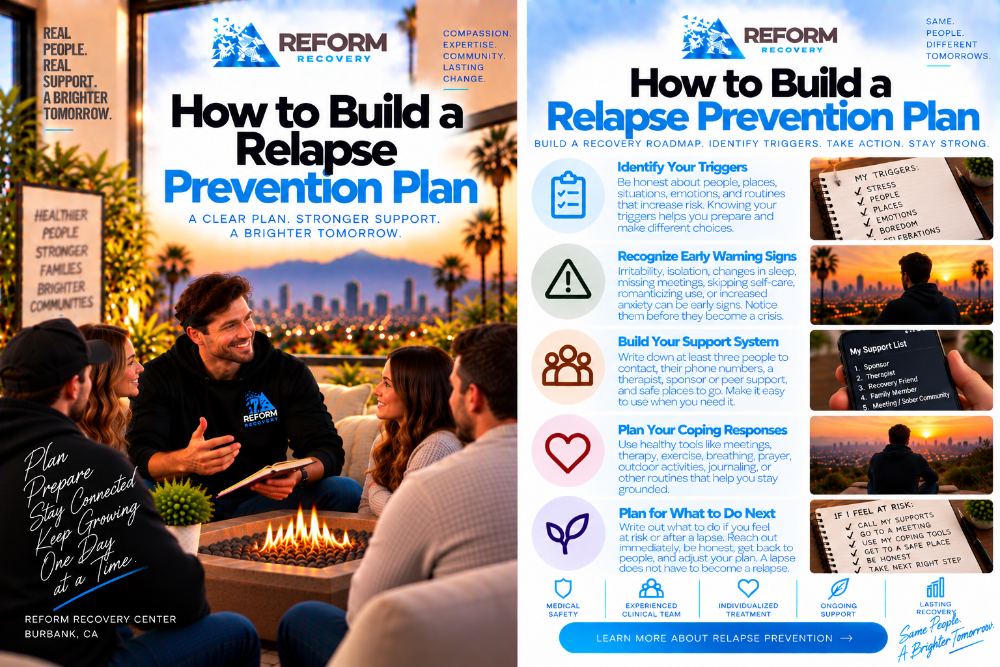
A relapse prevention plan is a personalized, written roadmap for staying on track — especially in hard moments. Having one before you need it is one of the smartest things you can do in recovery.
What to include
- Your triggers: the people, places, feelings, and situations that raise your risk.
- Early warning signs: isolating, skipping meetings, romanticizing use, bottling up emotions.
- Coping strategies: specific things to do when a craving hits (call someone, leave, use a grounding skill).
- Your support list: names and numbers to call, day or night.
- Your reasons: why recovery matters to you, in your own words.
Make it concrete
Vague plans fail. "I'll be careful" isn't a plan; "If I get the urge, I'll text my sponsor and go to a meeting" is. The more specific, the better it works under stress.
Keep it close and update it
Store it in your phone. Revisit it as you learn what works. A living plan grows with you.
We'll help you build one
Every person leaving Reform gets a personalized plan. Call us to learn more.
Ready to take the first step?
One confidential call is all it takes. We'll verify your insurance and handle the details.
Call 844-R-REFORMSources
- National Institute on Drug Abuse (NIDA) — Treatment and Recovery
- Recovery Research Institute (Massachusetts General Hospital / Harvard Medical School)
- SAMHSA — Find Support
These trusted, publicly available sources informed this article. Reform Recovery Center is not affiliated with and does not endorse these organizations; links are provided for educational reference.
This article is educational and is not medical advice or a substitute for professional care. If you or someone you love is in immediate danger, call 911. For emotional crisis or suicide support, call or text 988, 24/7.