




What We Treat
Fentanyl: Why It's So Dangerous and How to Get Help
Published Mar 1, 2026 · Updated Jul 8, 2026
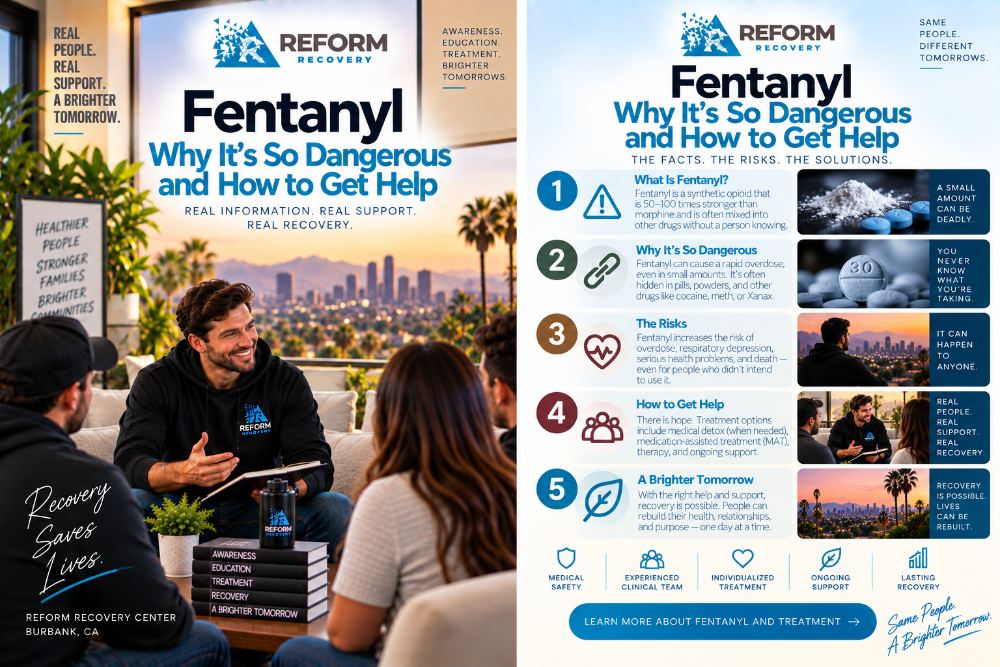
Fentanyl is a synthetic opioid up to 50 times stronger than heroin. Its potency — and the fact that it's now found in many street drugs — has made it the leading driver of overdose deaths. Understanding the risk can save a life.
Why it's so dangerous
Because fentanyl is so potent, an amount smaller than a few grains of salt can be fatal. It's often mixed into counterfeit pills, cocaine, and other substances without the user knowing, so people overdose on drugs they didn't realize contained it.
Reducing immediate risk
- Carry naloxone (Narcan) — it can reverse an opioid overdose.
- Never use alone.
- Assume street pills and powders may contain fentanyl.
These steps reduce risk but don't remove it — the only true safety is stopping use with support.
How to get help
Fentanyl dependence is treatable with medically supervised detox, MAT, and therapy. Given the overdose stakes, reaching out today matters. Call us — we'll move quickly and confidentially.
Ready to take the first step?
One confidential call is all it takes. We'll verify your insurance and handle the details.
Call 844-R-REFORMSources
- Centers for Disease Control and Prevention (CDC) — Fentanyl
- NIDA — Fentanyl DrugFacts
- SAMHSA — Medications for Substance Use Disorders
- MedlinePlus — Opioids and Opioid Use Disorder (OUD)
These trusted, publicly available sources informed this article. Reform Recovery Center is not affiliated with and does not endorse these organizations; links are provided for educational reference.
This article is educational and is not medical advice or a substitute for professional care. If you or someone you love is in immediate danger, call 911. For emotional crisis or suicide support, call or text 988, 24/7.